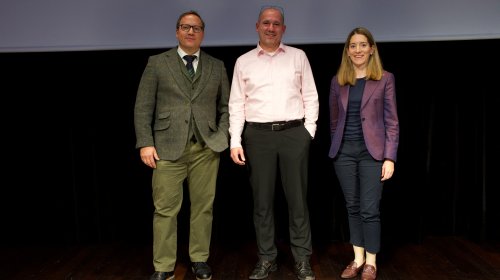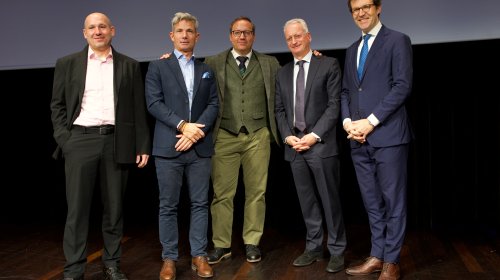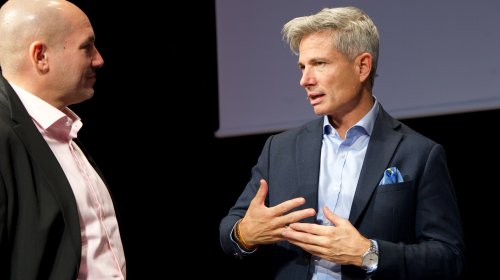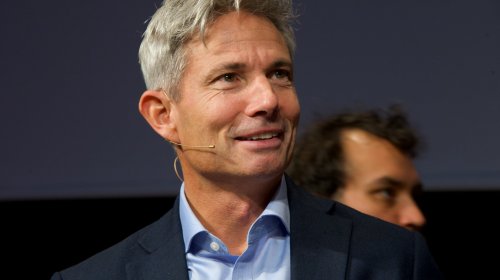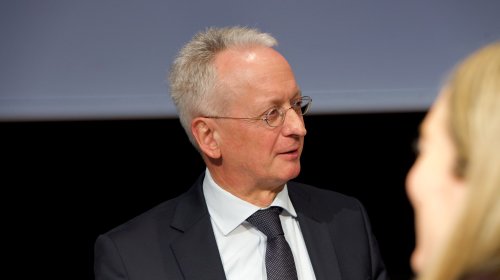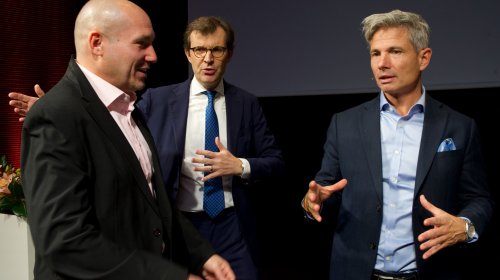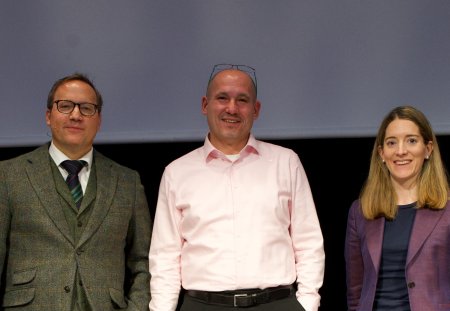
The Institute for Swiss Economic Policy (IWP) at the University of Lucerne awarded the IWP Prize for Economic Journalism for the third time on November 9, 2026. This year's prize was awarded to Carsten Korfmacher, Head of the Capital Department at Cicero magazine, for his report "Catharsis by Chainsaw" on the reforms of Argentine President Javier Milei, published in the October 2025 issue of Cicero. The ceremonial award ceremony took place in the auditorium of the KKL Lucerne.
In his introduction, Dr. René Scheu, Managing Director of the IWP, explained why the prize was established: to promote fact-based journalism. Gathering facts requires time, expertise, and money, whereas opinions are cheap. In a sea of mere opinions and hypercriticism, the IWP wants to set a counterpoint. Good reporting helps voters and citizens make better decisions. Over 70 entries from Switzerland, Germany, and Austria were submitted. The jury unanimously decided in favor of Korfmacher.
Jury member Dr. Alexandra Janssen, entrepreneur and advisor to the IWP, praised in her laudation how Korfmacher combines philosophical thinking with good journalism. He not only describes the chainsaw reforms of Argentine President Javier Milei but fundamentally asks what is needed for profound change to be possible in a society. He vividly shows how price controls, printing money, and ever-new state interventions have driven Argentina into a vicious circle. Korfmacher himself traveled to Argentina and spoke with the people behind the movement. For Switzerland, the text is a warning: federalism, direct democracy, and the debt brake make a chainsaw actually unnecessary. Yet, these institutions are currently being insidiously weakened.
In his speech, Carsten Korfmacher thanked the IWP for its courage to award a text that portrays Javier Milei in a positive light. In the European mainstream, the Argentine president is not very popular. He is particularly pleased that the prize is going to Germany for the first time. Compared to Switzerland, Germany has some catching up to do with liberal ideas. Argentina shows that every country makes wrong decisions in its own way. Once one of the richest countries in the world, it experienced 70 years of decline until Milei's program of radical economic freedom stopped it. Europe, therefore, has no inherent right to prosperity and peace. Both must be defended anew every day: against stifling bureaucracy, excessive regulation, and the reflex to solve every problem with even more state intervention.